
Cultivation Tool Disinfectant: What Actually Works on Pruners, Shears, and Scissors Between Plants
You reuse the same shears across a room of plants, and the honest fear is that you are spreading disease faster than you cut it back. A cultivation tool disinfectant has one job and three constraints: kill plant pathogens, work in a contact time short enough to use between cuts, and leave no residue that rides the blade into your next flower or mother plant. It also should not destroy the blade. Most of what ranks for this query is garden-tool advice built around bleach and alcohol, which solves the killing and ignores the residue and the steel. This page compares the chemistries honestly and shows where a residue-free ClO2 liquid fits.
What a cultivation tool disinfectant actually has to do
Strip the question to its real requirements before you compare products.
It has to carry a kill claim against the pathogens you actually spread on a blade: fungi, bacteria, and viruses in plant sap and debris. It has to do that in a contact time you can live with between plants, because a protocol that demands a long soak will not survive a real trim shift. It cannot leave a residue that transfers to living tissue, because the tool re-enters the canopy in seconds, not hours. It should be metal-safe on carbon-steel and stainless blades, since your pruners are not disposable. And for a licensed grow, it should be EPA-registered with a use site that actually covers hard surfaces and tools. Hold any product up against those five and most of the garden-tool SERP falls away.
The chemistries you will see, ranked for reuse-in-canopy work
The extension-office pages name four chemistries, and each fails at least one constraint.
Chlorine bleach (sodium hypochlorite) is the default advice and it does kill fast; one extension source says a 10% solution "This will kill fungi, bacteria, and viruses within seconds." The problem is the blade and the residue. The same source warns that bleach "corrodes metal and is not recommended for pruning and cutting tools that require a sharp edge, as it can create pits and nicks in the metal." Other guidance pushes a 30-minute soak with a short solution shelf life, which is a non-starter for between-plant use.
Alcohol (70% isopropyl or ethanol) is the other default. It wipes on, acts fast, and evaporates clean, which is genuinely useful. But it is flammable in a sealed room, and its spectrum is limited; extension guidance flags that alcohol may not knock down certain pathogens such as the organism behind fire blight. It is a reasonable quick wipe, not a complete answer.
Household disinfectants and quats are easy to buy and mostly non-corrosive, but as one university source concedes, "little research has been done regarding their effectiveness against plant pathogens," so you are trusting a label written for a kitchen, not a canopy.
Chlorine dioxide (ClO2) is the chemistry none of the garden-tool pages name, and it is the one built for this exact constraint set: a defined contact time, no residue, and metal tolerance at use dilution.
Side by side: contact time, residue, and the blade
Put the trade-offs in one view, because the decision is really about residue and steel, not killing power.
Bleach kills in seconds but pits blades and leaves a residue you have to rinse before the tool touches a plant. Alcohol is fast and clean but flammable and spectrum-limited. Quats are gentle on metal but thin on plant-pathogen data. A water-activated ClO2 liquid disinfects hard, non-porous surfaces at a defined rate, leaves no residue, and is tolerable to metal at use dilution. The honest residue admission on the incumbent pages is the tell: one extension page instructs that after dipping, "be sure to wipe away excess disinfectant to avoid injuring the next plant," which concedes the residue problem without solving it. A no-residue chemistry removes the wipe step and the worry behind it.
How ClO2 fits the between-plant use case
Here is where a commercial-grade product earns its place over the under-the-sink options.
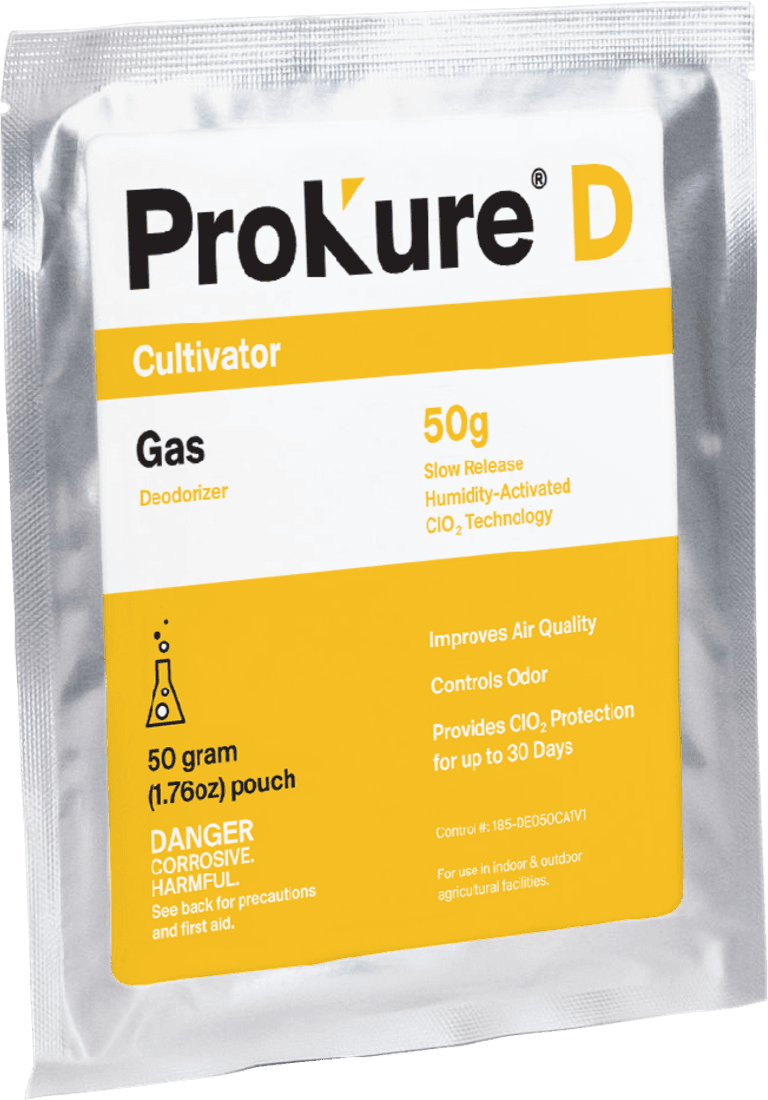
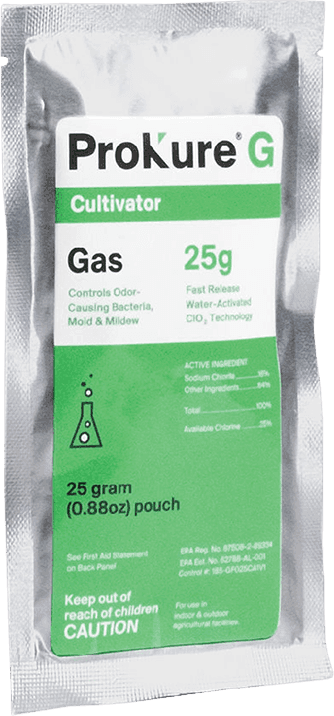
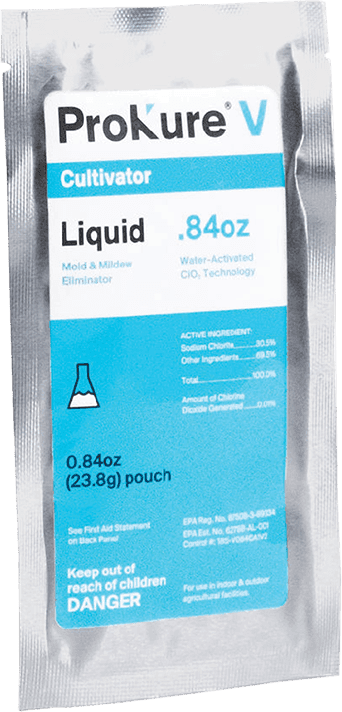
ProKure V is a water-activated liquid Hospital-Type Disinfectant, EPA Reg. No. 87508-3-89334. Its approved claims are the ones a grower needs on a tool: it "Kills mold and mildew," "Kills SARS-CoV-2 virus on hard non-porous surfaces in 30 seconds," is "Suitable for use with plants in the room," and "Leaves no residue." To disinfect hard, non-porous surfaces it is used at 100 ppm with a 10-minute contact time. The plants-in-room and no-residue pairing is exactly what bleach and quats cannot claim, and it is why ClO2 fits a shear that re-enters the canopy. The boundary to respect: the label governs surface and tool disinfection, not spraying the plant itself. See product label for specific instructions and claims, and remember it is a violation of Federal Law to use the product in a manner inconsistent with the labeling. This is a surface disinfectant; the fast-release gas ProKure G, which carries "Not for use with/on plants/crops/feed," is the empty-room product and is not what you dip a tool in with plants present.
The between-plant protocol your crew will actually follow
A disinfectant only works if the protocol survives a real trim day, so keep it short and documented.
Run a two-tool rotation, the method both of the ranking extension pages endorse: one tool in use, one in the disinfectant, so a blade is always dwelling while the other cuts. The sequence per tool is pre-clean to remove sap and debris (organic residue kills any disinfectant's efficacy), dip or spray to the labeled contact time, let it dwell, dry, then cut. Change the dip bath on a schedule rather than when it looks dirty, since spent solution is a false sense of security. And log it: a one-line batch record with date, room, product, EPA registration number, and the applicator's initials turns a habit into the documentation trail a compliance auditor and your own QA lead will ask for.
EPA labels and state compliance for licensed cannabis operators
For a licensed grow, the label discipline is the compliance story, so read it before you standardize.
Start in the product's Site of Use section to confirm hard surfaces and tools are covered, and keep the SDS and label on file for audit. Cross-reference your state's cannabis-approved pesticide and sanitizer list, because EPA registration is the federal floor and some states add their own requirements on top; confirm with your state regulator rather than assuming the federal label settles it. The claim-to-product discipline matters here too: ProKure V carries the surface disinfection claims and is plants-in-room safe, while the fast-release gas carries the plants-crops-feed disclaimer, so your sanitation log names the right product for the right job. For the wider room and air program this tool protocol sits inside, our mold prevention protocols and cultivation IPM resources carry the rest. Order ProKure V on shop.groclarity.com, pull the label and SDS from prokuresolutions.com, and call GroClarity at 866.206.1301 to standardize a between-plant SOP across your rooms.
FAQ
The questions growers ask about disinfecting cultivation tools between plants.
Related resources