
What ProKure D is, and the compliance line that governs it
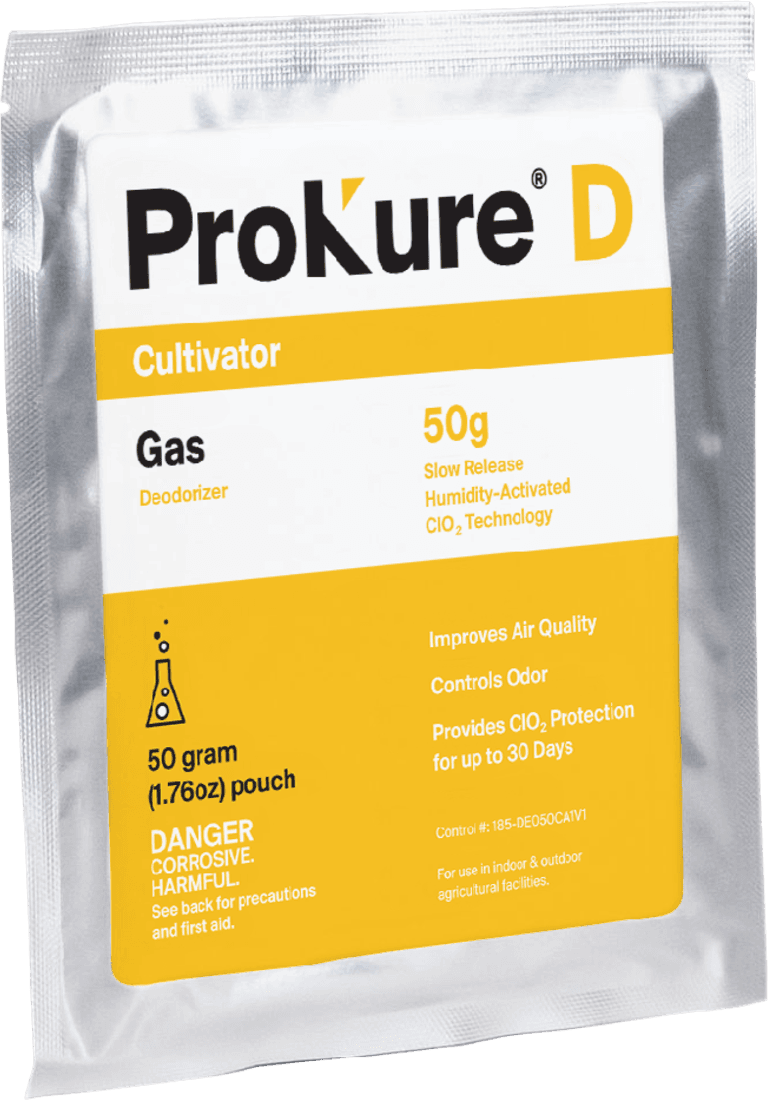
ProKure D is a slow-release gas that provides ClO2 protection for up to 30 days. Its approved role is narrow and worth stating exactly: it improves air quality and controls odors. It is not a mold-kill claim on the crop, and it is not an EPA-registered product. The required disclaimer travels with it: ProKure D is not an EPA-registered product and not labeled for sale as a pesticide under 40 CFR. For an Arizona operator, that status is not a weakness to hide; it is a fact procurement discloses in the compliance file so an auditor sees it stated plainly rather than discovering it. ProKure D is an air-quality and odor product that runs on an up-to-30-day window, used per its label.
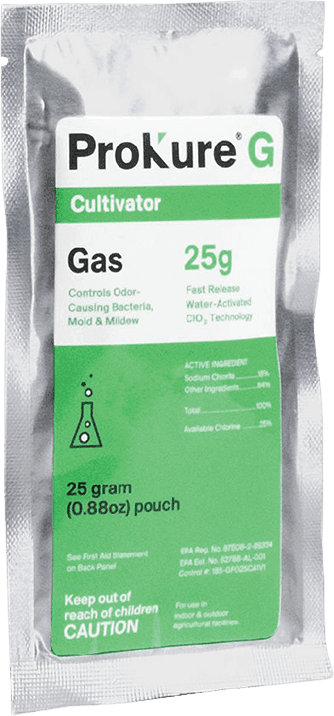
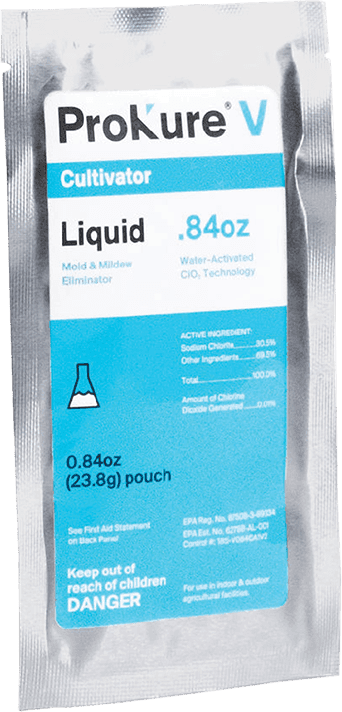
Because Arizona cultivation happens in sealed, climate-controlled indoor rooms across a hot, dry state, the air-quality job is continuous rather than a one-time reset, which is where the up-to-30-day slow-release window fits a maintenance rhythm rather than a fast turnover. When a grower needs a fast empty-room air reset instead, that is a different product in the line with its own label; when a grower needs hard-surface disinfection, that is ProKure V, the EPA-registered liquid surface disinfectant. Keep the three jobs and the three labels matched.
Arizona air-quality and testing framework at a glance
Arizona's marijuana program sits with the Arizona Department of Health Services, which handles licensing, testing requirements, and the rules that cultivation facilities operate under. The testing side is where air quality meets compliance: product is tested for microbial contaminants, and a facility that cannot control its grow-room air risks a failing result on mature flower. Confirm the current Arizona total-yeast-and-mold thresholds and the specific testing contaminant panel directly with ADHS or your licensed Arizona testing lab before building an SOP around a number, because the binding figure is the ADHS figure, not an industry rule of thumb.
| Compliance factor | Arizona (confirm current figures with ADHS) | --- | --- | Regulatory body | Arizona Department of Health Services (ADHS) | Market type | Medical and adult-use marijuana | Microbial testing | Required contaminant testing including yeast and mold; confirm current CFU/g threshold with ADHS or your testing lab | Odor control | Facility odor management expected at the local siting and nuisance level; confirm municipal requirements for your city | ProKure D role | Air-quality and odor control for up to 30 days; not an EPA-registered product (40 CFR disclaimer applies) |
The table structure stays constant across states so a multi-state operator can read Arizona against its neighbors; the figures localize to ADHS. Where a threshold is not yet confirmed, treat it as confirm-with-regulator rather than a blank.
Which ProKure product addresses this
For ongoing air quality and odor in an occupied, running grow room, ProKure D is the fit: a slow-release gas providing ClO2 protection for up to 30 days that improves air quality and controls odors, with the 40 CFR not-an-EPA-registered-product disclaimer carried in every compliance reference. For hard-surface disinfection between cycles, ProKure V is the EPA-registered liquid disinfectant (EPA Reg. No. 87508-3-89334) for hard, non-porous surfaces, suitable for use with plants in the room and leaving no residue. For a fast empty-room air reset, ProKure G is the EPA-registered fast-release gas (EPA Reg. No. 87508-2-89334), labeled not for use with/on plants/crops/feed, an empty-room product. An Arizona facility typically runs D for continuous air quality and reserves V for turnover surface work.
Talk to GroClarity in Phoenix
GroClarity is based in Phoenix, Arizona at 5013 E. Washington St. Ste. 130, Phoenix, AZ 85034, and can be reached at 866.206.1301. For an Arizona cultivator, that means the team that builds your air-quality and odor-control protocol is in-state, works the same ADHS framework you do, and can pair ProKure D with the monitoring and documentation an ADHS-regulated facility keeps. Consulting and protocol scoping are quoted per facility.
Sibling states with the same topic
Air-quality and odor-control compliance is a cross-state exercise for multi-state operators, and the protocol standardizes even as the regulator changes. Operators comparing Arizona to other served markets can review the same air-quality topic for neighboring states in the state compliance grid, standardizing on the same ProKure D air-quality approach while localizing the regulatory body and thresholds to each state.
Frequently Asked Questions
Is ProKure D legal to use in an Arizona cannabis facility?
ProKure D is an air-quality and odor-control product, not an EPA-registered pesticide, and its required disclaimer is that it is not an EPA-registered product and not labeled for sale as a pesticide under 40 CFR. Used per its label for air quality and odor control, it is positioned for that role. Keep the label and SDS in your compliance file, and confirm any facility-specific requirements with ADHS, because the regulator sets the rules your facility operates under.
Does ProKure D help with Arizona total yeast and mold testing?
ProKure D improves air quality and controls odors; it is not a mold-kill claim on the crop. Clean grow-room air is part of a prevention program that keeps microbial load down, but the product that disinfects hard surfaces is ProKure V, and your total-yeast-and-mold result at the ADHS-required test depends on your whole prevention program, not one product. Confirm the current Arizona threshold with ADHS or your testing lab.
How long does ProKure D last?
ProKure D provides ClO2 protection for up to 30 days. Keep the up-to qualifier: it is a maximum window, not a flat duration, and protection tails off toward the end of the window, so facilities that want continuous coverage stage replacements before the window closes. Size pouches to the room volume in cubic feet per the product label.
Who regulates cannabis cultivation air quality in Arizona?
The Arizona Department of Health Services (ADHS) licenses and regulates marijuana establishments and sets the testing requirements that cover microbial contaminants. Facility odor control is generally managed at the local siting and nuisance level, so check your municipality's requirements in addition to the ADHS rules. For mold and air-quality compliance specifically, ADHS is the agency whose rules bind your cultivation facility.