
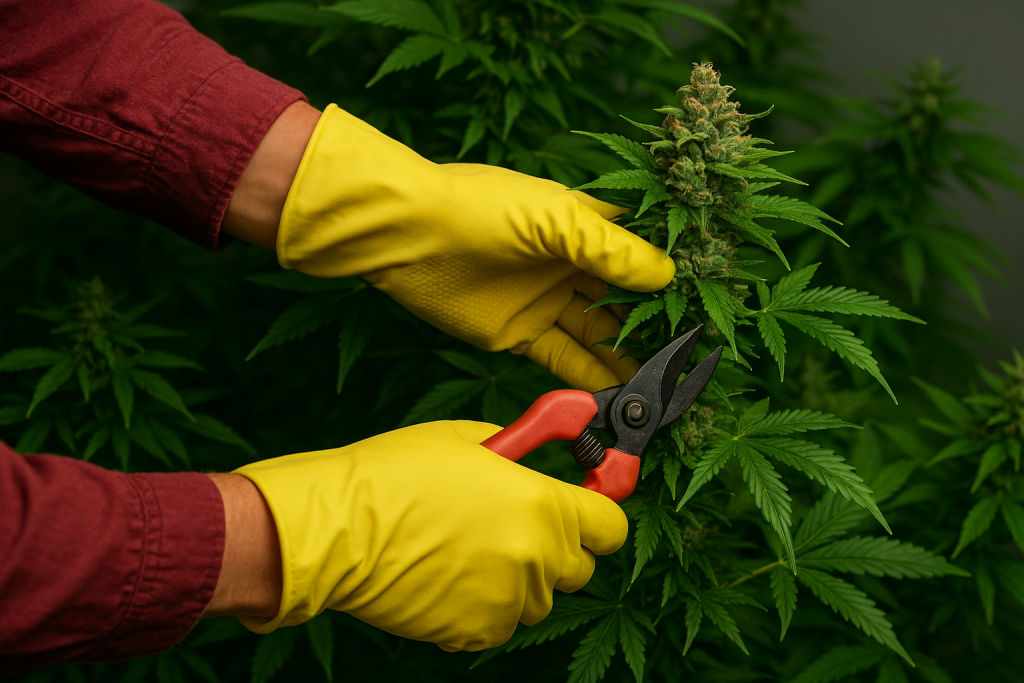
Healthy plants grown in clean environments produce higher-quality products, command stronger market prices, and move more easily through the supply chain. The quality of harvested cannabis is determined long before the plants are cut down. Simply put: clean plants and clean spaces create clean products and clean shelves.
While cultivation teams spend months optimizing lighting, irrigation, nutrition, and environmental controls, harvest introduces a unique contamination risk that can quickly undo those efforts. Mold, bacteria, and other unwanted pests that may have existed at low levels during cultivation can become significant contamination sources during harvest and post-harvest handling.
Harvest: A Critical Contamination Event
During cultivation, microbial contamination often remains localized within plant tissues, on leaf surfaces, or within small areas of the canopy. Once plants are cut down, however, these contamination sources can become airborne.
Harvesting exposes plant tissues and disturbs surfaces that may contain fungal growth. Mold colonies hidden within dense flowers or internal plant tissues can release large quantities of spores when disturbed. This phenomenon is especially noticeable during trimming, bucking, and mechanical processing operations where vibration and physical agitation can rapidly disperse spores into the surrounding environment.
Every cut, movement, transfer, and processing step creates opportunities for contamination to spread.
Without proper controls, contamination from a single plant can become contamination across an entire harvest batch.
Airborne Cross-Contamination
Airborne spores are among the most challenging contamination sources to control during harvest. Once released, spores can settle onto harvested flowers, processing equipment, storage containers, packaging materials, and nearby product lots.
This is why harvest rooms should be treated as controlled environments.
Whenever possible:
- Prevent air from leaving harvest and processing rooms.
- Maintain directional airflow that minimizes contamination migration.
- Limit personnel movement between cultivation and harvest areas.
- Avoid moving harvested material through active cultivation spaces.
- Clean ventilation components and air handling equipment regularly.
A spore released during harvest should never be allowed to become a facility-wide contamination event.
Planning Product Movement
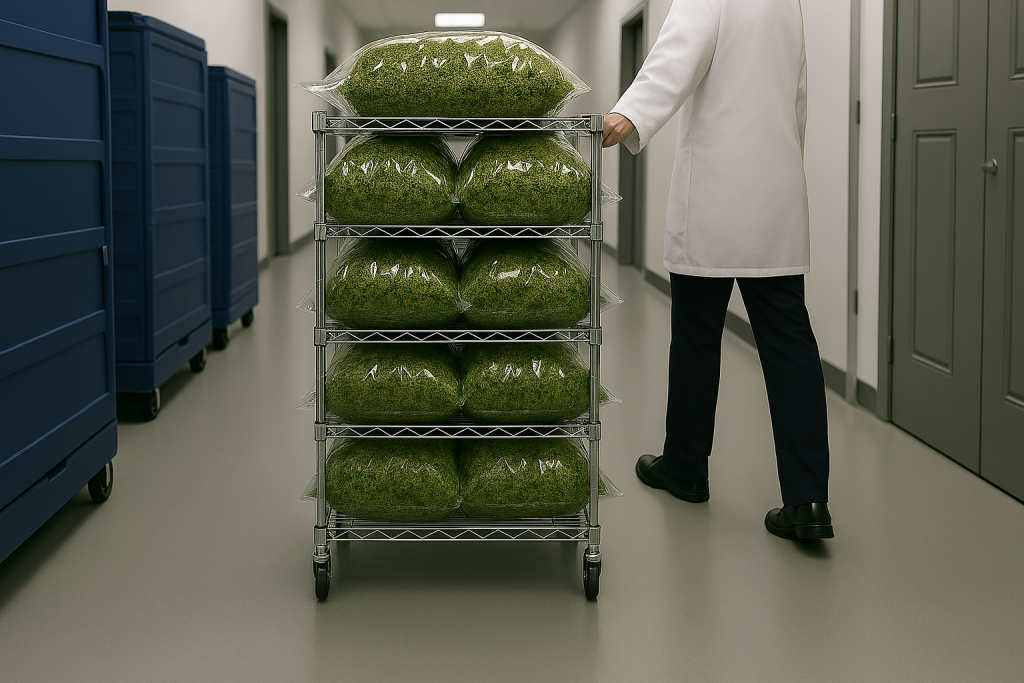
One of the most overlooked contamination risks is transportation of freshly harvested material through the facility.
Consider the path every harvested plant takes from cultivation room to drying room, trimming area, storage location, and final packaging.
Questions every facility should ask include:
- Does harvested material pass through active grow rooms?
- Does it share hallways with clean product?
- Are carts & equipment moving between multiple cultivation zones?
- Are employees handling both live plants and harvested material during the same shift?
The ideal harvest workflow minimizes movement, minimizes exposure, and minimizes opportunities for cross-contamination.
Harvested material should move directly to its destination using the shortest practical route while avoiding areas containing healthy, unharvested plants.
Equipment Matters
Harvest equipment can quickly become a contamination vector.
Trimming machines, bucking machines, collection bins, tables, totes, carts, scissors, and hand tools all come into direct contact with plant material. If not properly maintained & cleaned, they can transfer contamination from one batch to another.
Best practices include:
- Cleaning and sanitizing all harvest equipment before use.
- Establishing sanitation intervals throughout harvest operations.
- Cleaning and disinfecting tools between batches.
- Using dedicated tools for specific rooms or lots when possible.
- Inspecting equipment regularly for plant debris accumulation.
Even small amounts of residual plant material can harbor microbial contamination and serve as a source of inoculum for future harvests.
Cart and Transport Sanitation
Transportation equipment deserves special attention.
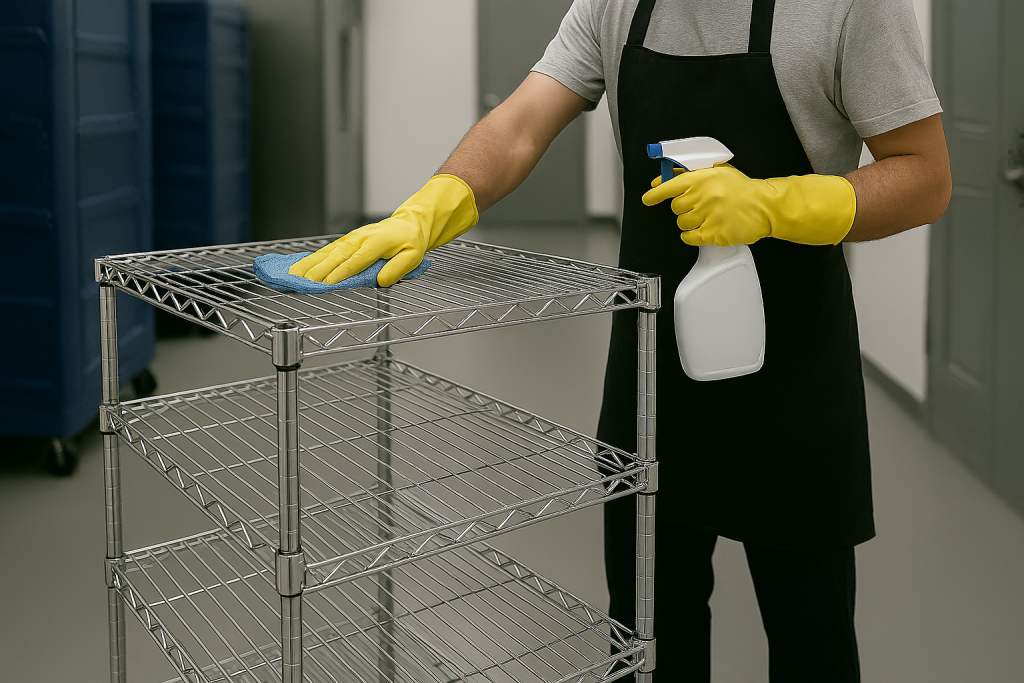
Carts and transport systems should be designed to minimize contamination spread. Smooth surfaces are easier to clean and less likely to trap plant debris. Stable transport systems that reduce vibration can also help minimize unnecessary spore release from harvested material.
After each use:
- Remove visible debris.
- Clean all contact surfaces.
- Sanitize according to facility SOPs.
- Verify equipment is dry and ready for reuse.
No harvested material should contact a surface that has not been properly cleaned and sanitized.
Batch Separation Is Critical
Many facilities focus heavily on cultivation room sanitation but overlook contamination transfer between harvested batches.
Material harvested from one room can easily cross-contaminate material harvested from another room if strict separation procedures are not followed.
Maintaining batch integrity requires:
- Dedicated staging areas.
- Physical separation of harvest lots.
- Proper labeling and tracking.
- Cleaning and sanitizing equipment between batches.
- Restricting movement of tools and materials between harvest groups.
When contamination is discovered during testing, strong batch separation procedures can significantly reduce the amount of product impacted.
Documentation Supports Prevention
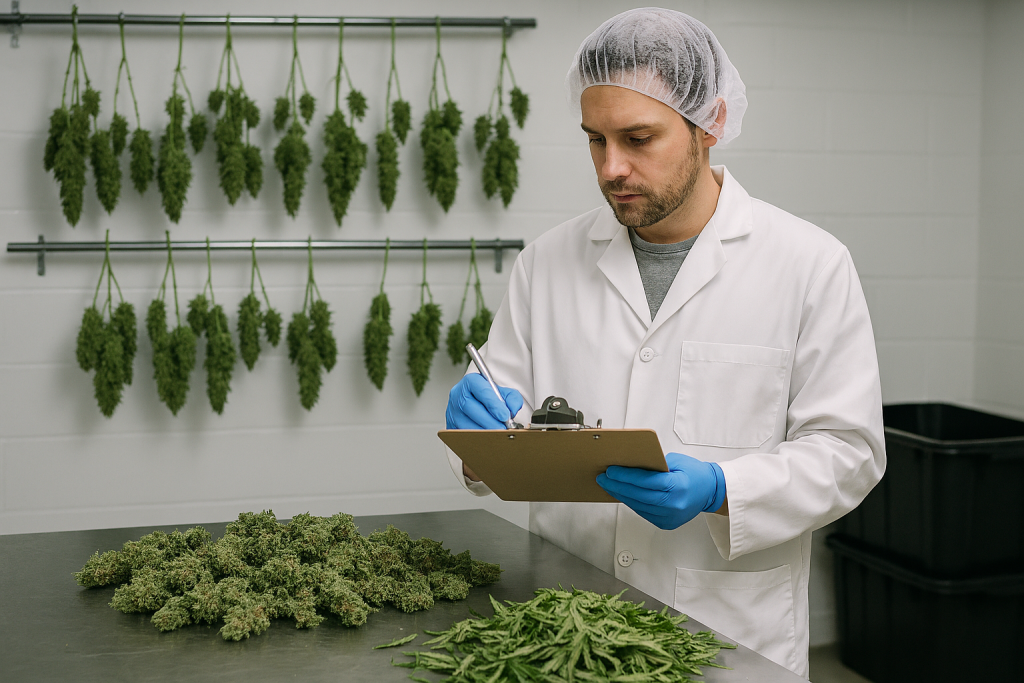
Good recordkeeping is one of the most effective contamination management tools available.
Observations made during propagation, vegetative growth, flowering, and harvest can provide valuable information for post-harvest decision-making.
Documentation should include:
- Environmental conditions.
- Disease observations.
- Pest pressure.
- Sanitation activities.
- Harvest dates.
- Employee observations.
- Corrective actions.
Historical records help identify contamination trends, improve SOPs, and support root-cause investigations when microbial testing results do not meet expectations.
Harvest Sanitation and Regulatory Compliance
Every cultivation facility operates under regulations that ultimately require products to meet microbial quality standards before entering the marketplace.
Failed microbial testing can lead to delays, additional processing costs, remediation expenses, product downgrades, or even product destruction.
Harvest sanitation is not simply a housekeeping activity—it is a quality assurance program that protects product value.
Facilities that consistently produce clean, compliant products gain operational efficiencies, reduce product & financial losses, and build stronger relationships throughout the supply chain.
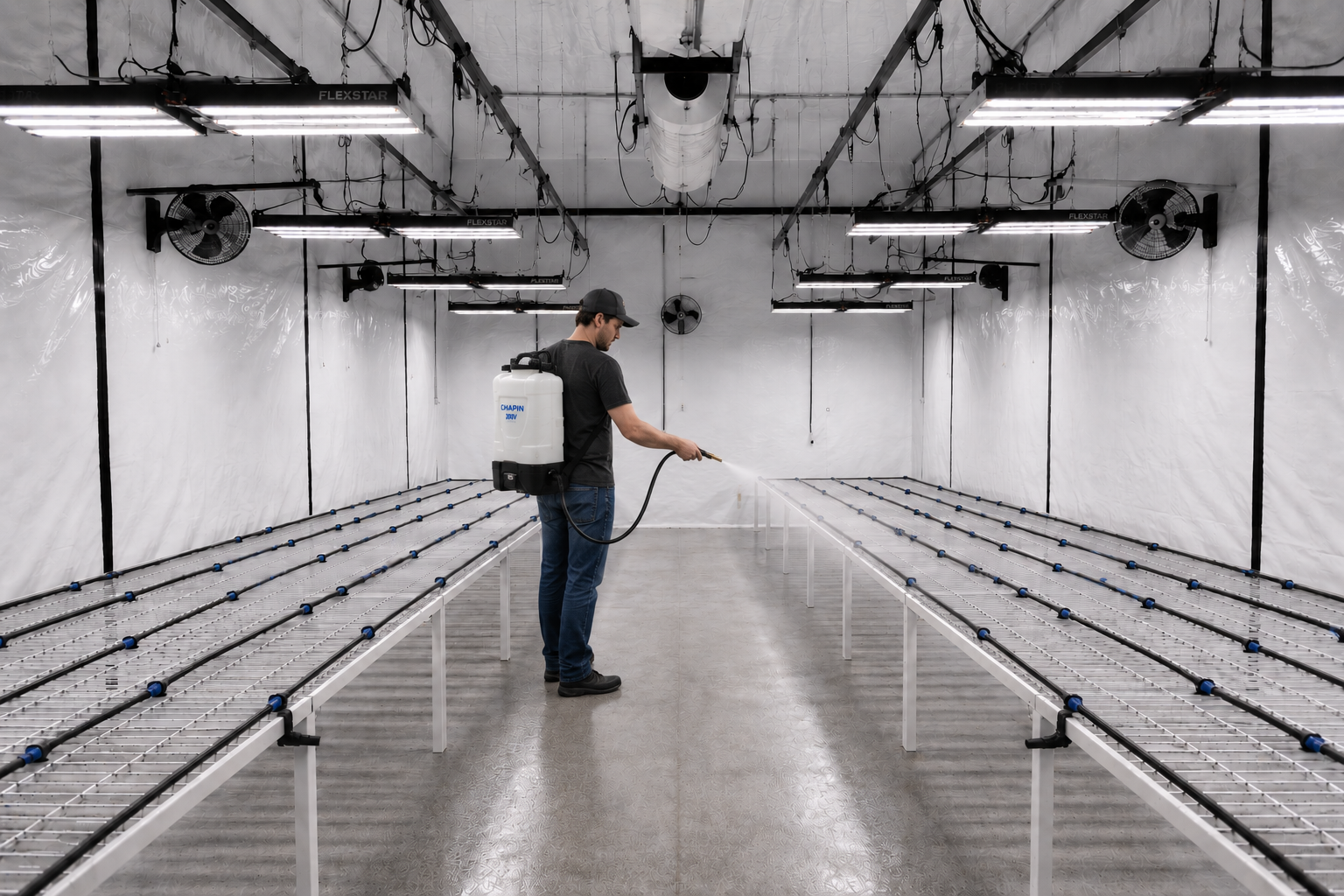
Clean Plants. Clean Spaces. Clean Products.
The most successful harvest programs begin long before harvest day.
Healthy plants grown in well-maintained environments enter harvest with a lower contamination burden. Effective sanitation programs prevent contamination from spreading during processing. Well-designed SOPs protect product quality throughout every handling step.
Clean plants and clean spaces create clean products.
And clean products are what ultimately earn space on dispensary shelves, achieve premium pricing, and build long-term consumer trust.
Building a Harvest Sanitation SOP
A successful harvest sanitation program does not happen by accident. It is the result of clearly defined Standard Operating Procedures (SOPs) that establish expectations before, during, and after harvest activities.
While every facility is unique, effective harvest sanitation programs typically include four key components: preparation, active harvest controls, post-harvest sanitation, and environmental management.
Pre-Harvest Preparation
Sanitation efforts should begin before the first plant is cut.
Prior to harvest:
- Clean and sanitize harvest rooms, drying areas, and staging spaces.
- Inspect carts, bins, totes, trimming tables, and processing equipment.
- Verify that sanitation supplies and PPE are available.
- Establish designated traffic patterns for personnel and harvested material.
- Confirm airflow and environmental controls are operating properly.
- Review contamination observations and notes collected throughout cultivation.
Facilities that enter harvest with clean spaces and a clear plan are far less likely to experience cross-contamination issues during processing.
Active Harvest Controls
Once harvest begins, contamination prevention becomes a continuous process.
Employees should focus on minimizing the movement of contamination throughout the facility by:
- Removing plant debris frequently.
- Cleaning work surfaces throughout the day.
- Sanitizing tools at established intervals.
- Keeping harvest lots separated and clearly identified.
- Restricting unnecessary movement between cultivation and harvest areas.
- Monitoring equipment for debris accumulation.
The goal is to prevent contamination from building throughout the workday and becoming increasingly difficult to control.
Post-Harvest Sanitation
After harvested material leaves a room, sanitation activities should begin immediately.
Post-harvest cleaning procedures should include:
- Removal of all plant debris.
- Cleaning of floors, walls, equipment, and work surfaces.
- Disinfection of high-touch and product-contact surfaces.
- Cleaning of carts, transport equipment, and storage containers.
- Inspection and cleaning of trimming and bucking equipment.
- Documentation of completed sanitation activities.
A room should be returned to a clean, ready-to-use condition before additional plant material ever enters the space.
Managing Air Quality During Harvest
Air management is often overlooked during harvest sanitation programs, yet airborne contamination can become one of the largest sources of cross-contamination.
Activities such as cutting, bucking, trimming, and material handling can release large numbers of spores, dust particles, and plant debris into the surrounding environment.
Maintaining clean air throughout harvest operations can help reduce the movement of contaminants onto harvested material, equipment, and surrounding work areas.
Many facilities incorporate air cleaning technologies as part of their overall environmental management strategy to support cleaner harvest environments and reduce the accumulation of airborne contaminants during processing activities.
When combined with effective cleaning, sanitation, and workflow controls, air quality management becomes another important layer of protection for maintaining product quality throughout harvest and post-harvest operations.
Consistency Creates Quality
The best sanitation SOP is one that is followed consistently.
Well-trained employees, documented procedures, routine verification, and continuous improvement create a culture where sanitation becomes part of everyday operations rather than a reaction to contamination problems.
Facilities that prioritize harvest sanitation are not simply reducing risk—they are protecting product quality, supporting regulatory compliance, and preserving the value of every pound produced.