
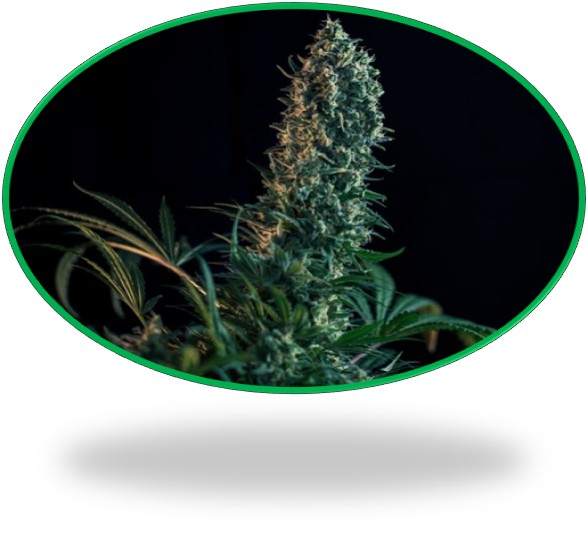
Protecting Your Crop During the Most Critical Growth Stage
The flowering stage is where months of planning, labor, and investment begin to pay off. It is also one of the most vulnerable periods in the cultivation cycle. As plants transition from vegetative growth to flower production, resources are increasingly directed toward developing reproductive structures. During early flowering, this shift can leave plants more susceptible to environmental stressors and opportunistic pathogens, particularly molds and fungi.
Unfortunately, once flowers are present, treatment options become significantly more limited. Many products that may be acceptable during propagation or vegetative growth are no longer suitable because of the risk of contaminating harvested flower. This makes prevention far more valuable than remediation.
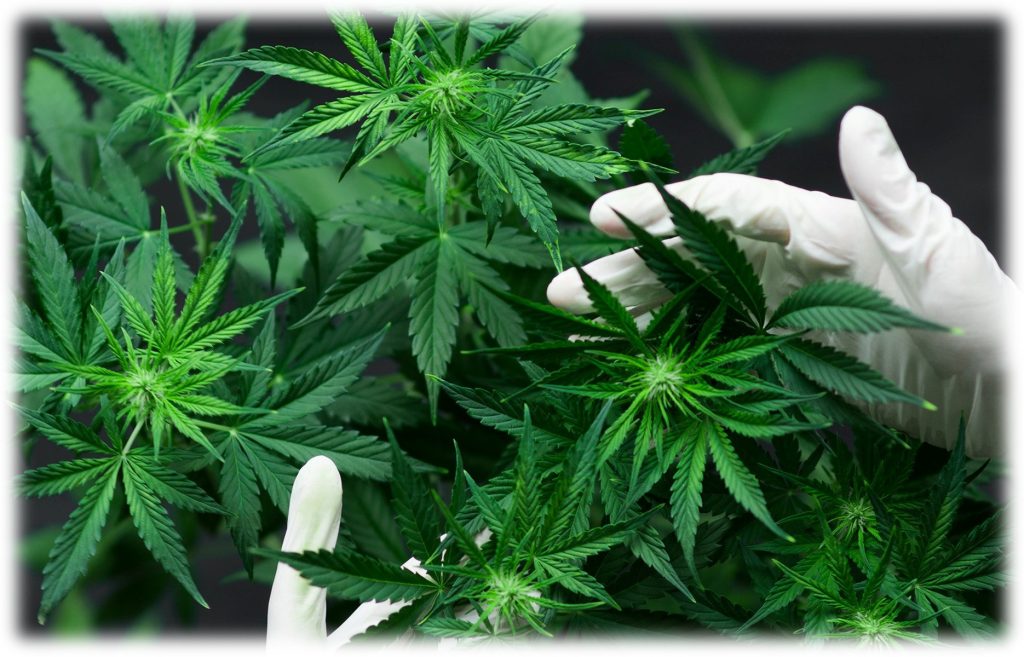
Why Early Flower is a High-Risk Period
As flower sites begin to form, dense plant canopies create new microclimates where moisture can accumulate. Combined with changing plant physiology and increased biomass, these conditions can provide an ideal environment for fungal development.
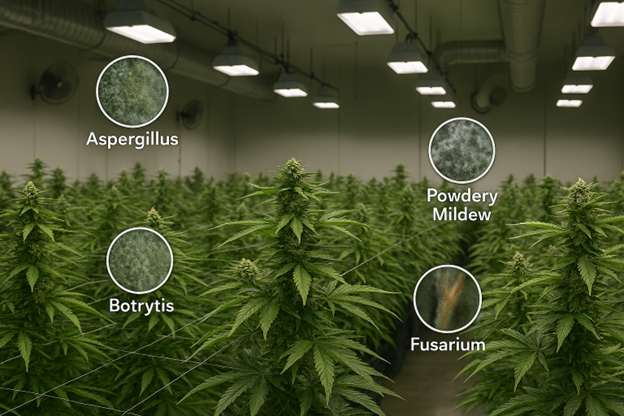
Common challenges during flowering include:
- Powdery mildew
- Botrytis (bud rot)
- Aspergillus species
- Fusarium species
- Bacterial contamination associated with excess moisture
By the time symptoms become visible, contamination may already be widespread throughout the cultivation area.
Environmental Control Becomes Your First Line of Defense
During flowering, environmental management is often more important than any treatment program.
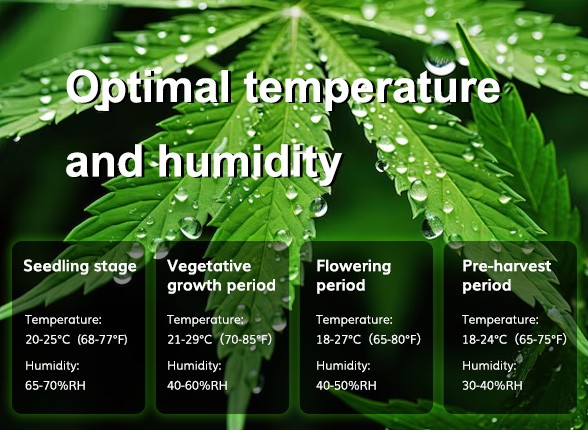
Relative Humidity (RH)
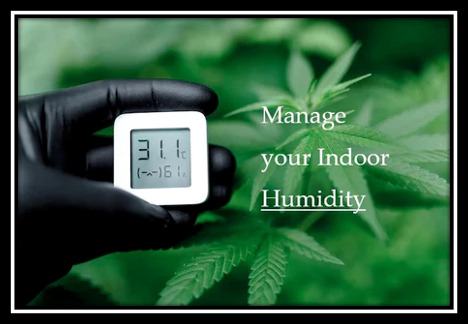
Relative humidity is one of the most critical factors influencing mold development. Elevated humidity allows moisture to remain on plant surfaces and within dense flower structures.
Best practices include:
- Maintaining stable RH levels appropriate for the stage of flowering
- Avoiding humidity spikes during lights-off periods
- Monitoring canopy-level conditions rather than relying solely on room sensors
- Eliminating stagnant air pockets within dense plant growth
Even brief periods of excessive humidity can create favorable conditions for fungal growth.
Temperature Management
Temperature directly influences both pathogen growth and moisture dynamics within the cultivation environment.
Considerations include:
- Maintaining consistent day and night temperatures
- Minimizing large temperature swings that can create condensation
- Monitoring leaf surface temperatures
- Ensuring HVAC systems are functioning optimally throughout flowering
Condensation events are often overlooked. Cannabis engineers must manage these events carefully because they can provide the free moisture that many pathogens require to establish themselves and ultimately devastate a crop. A strong IPM plan for cannabis cultivation includes detailed humidity and temperature scrutiny during the flowering stage.
Irrigation and Feeding Practices Matter
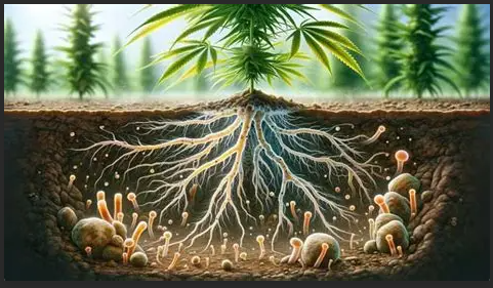
Many flowering-stage disease issues begin below the canopy.
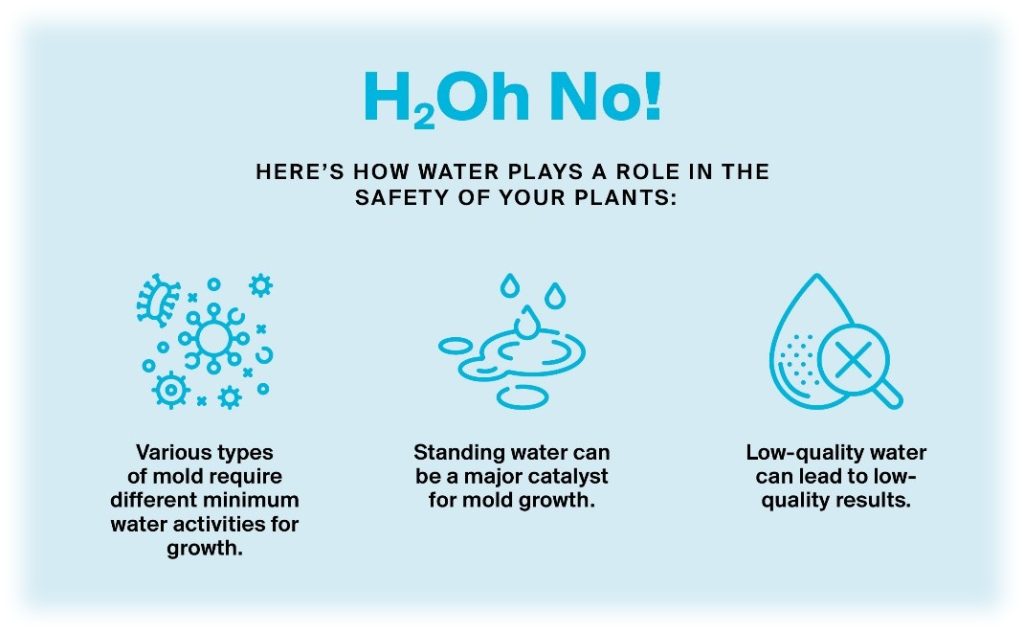
Overwatering can increase humidity, create standing water, and promote pathogen proliferation throughout the cultivation environment. Elite growers develop cannabis cultivation SOPs that include pathogen control solutions focusing on:
- Consistent irrigation schedules
- Proper dry back periods
- Avoiding excess runoff accumulation
- Monitoring substrate moisture levels
- Preventing nutrient solution stagnation
Healthy root zones support healthy flowers and reduce environmental stress that can make plants more vulnerable to disease.
Drainage and Runoff Management
Drain systems are frequently overlooked sources of contamination.
Runoff water can contain:
- Plant debris
- Organic matter
- Fungal spores
- Bacterial populations
If drainage systems are not properly maintained, they can become reservoirs that continually reintroduce contaminants into the cultivation environment.
Cultivators should:
- Regularly inspect drain lines and collection points
- Prevent standing water accumulation
- Remove organic buildup
- Sanitize drainage infrastructure between crop cycles
Clean drains are a critical component of a comprehensive biosecurity program.
Cross-Contamination Risks Increase During Flower
As flowers mature, every activity within the cultivation area becomes a potential contamination pathway.
Potential sources include:
- Employee movement between rooms
- Tools and equipment
- Irrigation systems
- HVAC systems
- Harvest equipment
- Floor drains and runoff collection areas
A single contamination source can quickly spread throughout a facility if sanitation protocols are not consistently followed.
Prevention is More Valuable Than Treatment
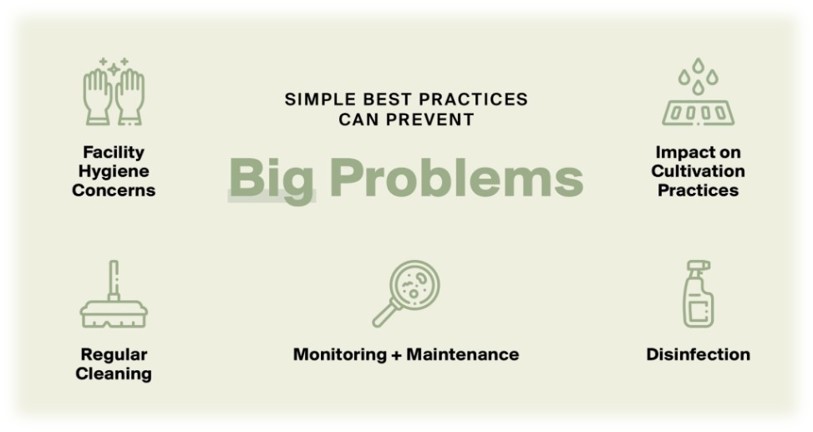
One of the greatest challenges during flowering is that intervention options become increasingly limited. Once contamination is established within developing flowers, corrective actions may negatively impact product quality, compliance, or marketability. Successful cultivators understand that flowering protection is built on the pillars of prevention:
- Strong sanitation programs
- Environmental monitoring
- Proper airflow management
- Effective moisture control
- Clean irrigation and drainage systems
- Consistent employee hygiene practices
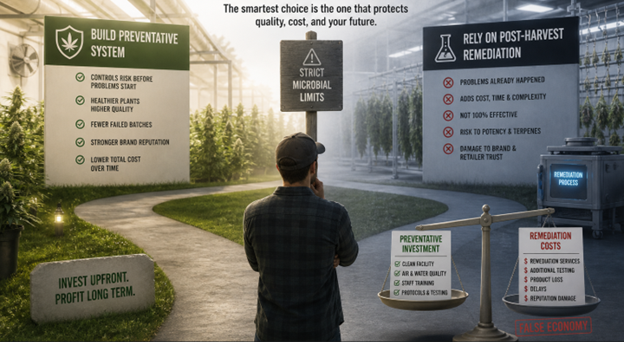
The Bottom Line
The flowering stage is where yield, quality, and profitability are ultimately determined. While mold and fungal pathogens remain a constant threat, most outbreaks can be traced back to environmental or sanitation failures that occurred long before symptoms appeared.
By maintaining tight control of relative humidity, temperature, irrigation practices, runoff management, and facility cleanliness, cultivators can dramatically reduce contamination risk and protect their harvest.
Stay clean during flower, and the reward is a cleaner harvest, higher-quality product, and maximum yield potential.