
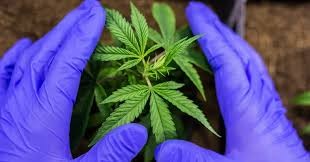
A well-designed sanitation program reduces pathogen pressure to near-zero, allowing cultivation teams to focus on growth optimization rather than remediation. For commercial operators, sanitation is not a task, it is a system, and when paired with chlorine dioxide technologies like ProKure, it becomes a highly reliable and scalable control point.
Sanitation at Planting and Transplanting: The Highest-Risk Moments
Planting and transplanting represent critical control points in a cannabis IPM program. These are the moments when plants are most vulnerable: root systems are exposed, tissues are easily damaged, and any introduced pathogen can rapidly colonize a new container, media, or irrigation zone.
A. Pre-Plant / Pre-Transplant Sanitation
Before any plant material is introduced:
- Containers and trays must be fully cleaned and disinfected
- Media contact surfaces (benches, floors) must be sanitized
- Tools and equipment (dibblers, transplanters, scissors) must be disinfected
- Irrigation systems must be verified clean and free of biofilm.
Operational Risk: Introducing clean plants into a contaminated container or environment immediately negates upstream IPM controls.
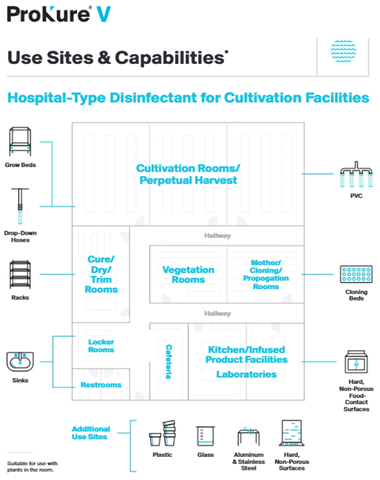
Integrate ProKure for surface disinfection prior to staging plants and for irrigation system sanitation to prevent root-zone inoculation.
B. During Planting / Transplanting
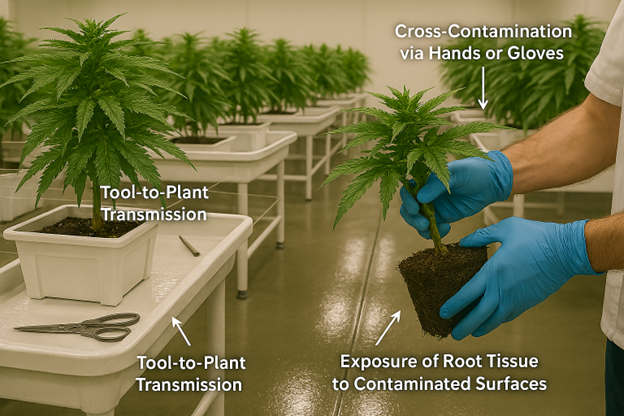
This phase presents the highest probability of mechanical transmission of pathogens.
Key risks include:
- Cross-contamination via hands or gloves
- Tool-to-plant transmission
- Exposure of root tissue to contaminated surfaces
Best Practices:
- Enforce glove sanitation or change protocols between batches
- Maintain clean tool workflows (sanitize between uses or zones)
- Avoid placing root balls on surfaces not yet sanitized
- Transplant in a clean-to-dirty directional workflow
Use ProKure to ensure rapid sanitation of tools and contact surfaces between batches as well as in footbaths and hygiene stations to reduce vector movement.
C. Post-Transplant Protection Window
After transplant, plants enter a stress-recovery phase where susceptibility to infection is elevated:
- Root micro-injuries provide entry points for pathogens (Fusarium, Pythium)
- Increased irrigation frequency can mobilize contaminants
- Environmental fluctuations can suppress plant defenses
Best Practices:
- Avoid overwatering to limit pathogen proliferation
- Ensure irrigation water is microbiologically controlled
- Maintain stable VPD and environmental conditions
Use ProKure to clean your water systems at appropriate intervals and maintain clean irrigation water to reduce root-zone pathogen pressure. Enforce overall environmental hygiene to limit opportunistic infections.
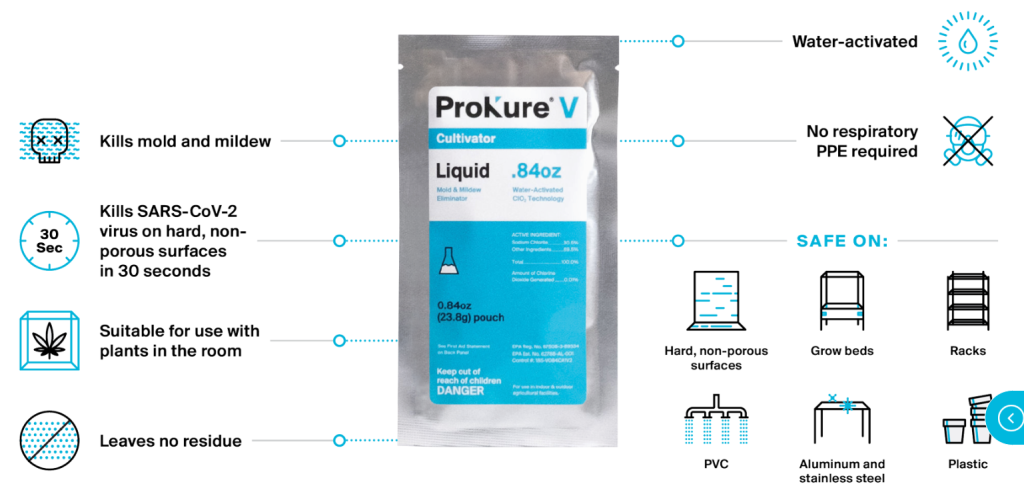
ProKure for Surfaces
- Benches, walls, floors, tools, trays
- Biofilm formation on plastics and irrigation components
Best Practices:
- Routine disinfection between crop cycles
- Spot sanitation during active cultivation
- Use of broad-spectrum oxidizing agents capable of penetrating biofilms
ProKure Advantage:
Chlorine dioxide provides true oxidative kill across bacteria, fungi, and spores without leaving harmful residues when used correctly.
ProKure for water systems
- Irrigation lines
- Reservoirs
- Emitters
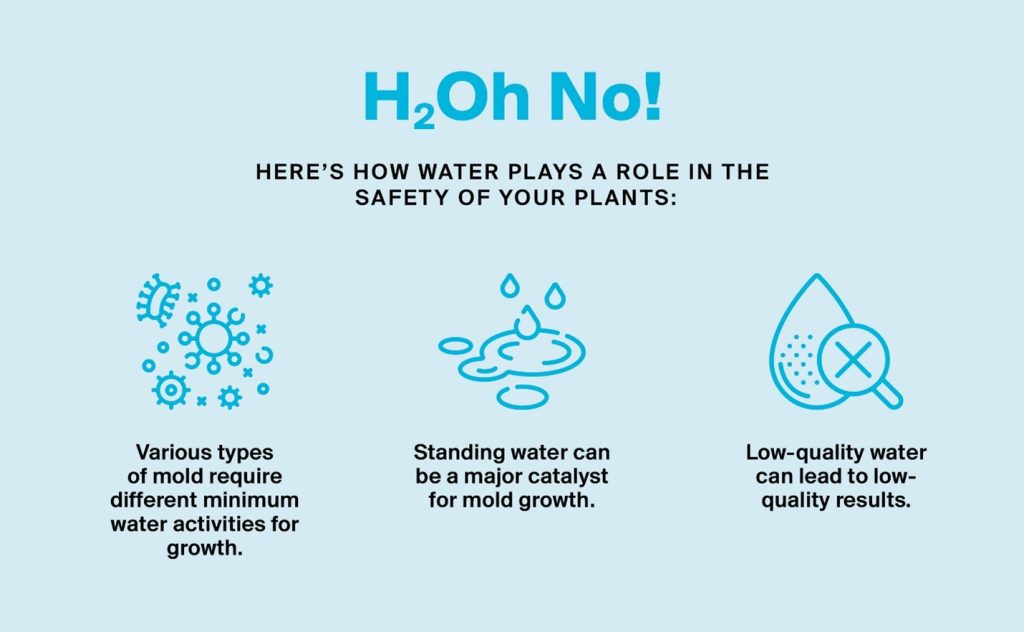
Water systems are one of the most overlooked contamination sources. Biofilms protect pathogens and continuously reintroduce them to the root zone.
Best Practice:
- Continuous or periodic low-dose treatment
- Routine line cleaning between cycles
Chlorine dioxide remains effective in the presence of organic load and can disrupt biofilms without the volatility and instability of traditional sanitizers.
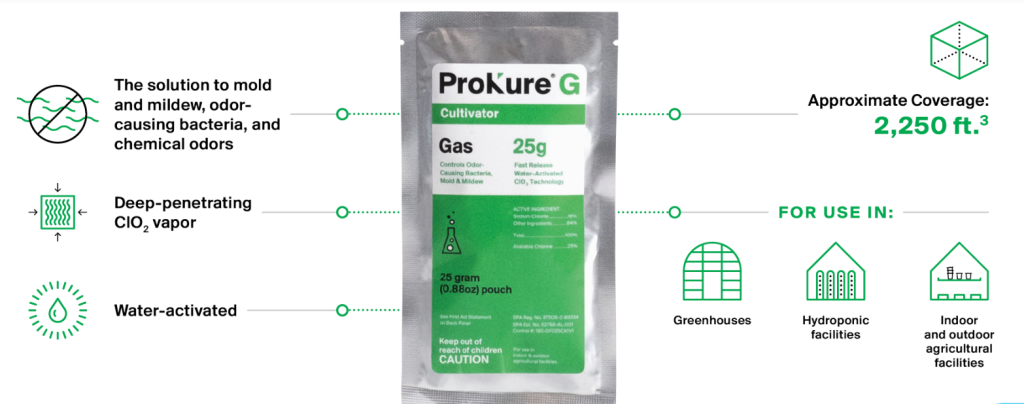
ProKure for Air and Environmental Surfaces
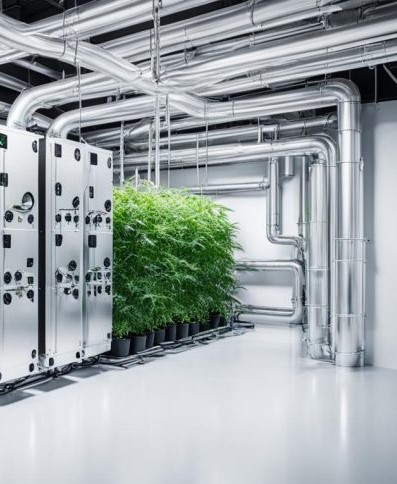
- HVAC systems
- Ducting
- Room airspace
Airborne spores are a primary vector for Powdery Mildew and Botrytis outbreaks.
Best Practice:
- Air handling sanitation
- Controlled-release antimicrobial treatments (aligned with label and regulatory guidance)
- Integration with filtration systems
Applicable across multiple sanitation vectors, enabling standardized chemistry throughout the facility.
Planting and transplanting are not just cultivation tasks, they are IPM (integrated pest management) inflection points. Effective IPM in cannabis cultivation starts with sanitation. Failures in sanitation at planting and transplanting stages create persistent contamination that follows the plant through its entire lifecycle. By integrating ProKure into pre-plant, active transplant, and post-transplant workflows, cultivators can control the highest-risk vectors of contamination and maintain a clean start for every crop cycle.